Jammu, July 13:
The Jammu and Kashmir Electrical Engineering Graduates Association (JKEEGA) has expressed serious concern over the Power Development Department’s decision to increase the notified voltage limit for self-certification of electrical installations from 650 volts to 11 kV. The association has appealed to Chief Minister Omar Abdullah to review the notification and keep its implementation in abeyance until a detailed technical and safety assessment is conducted.
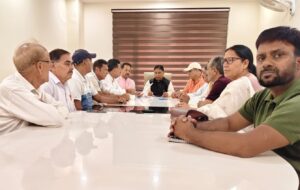
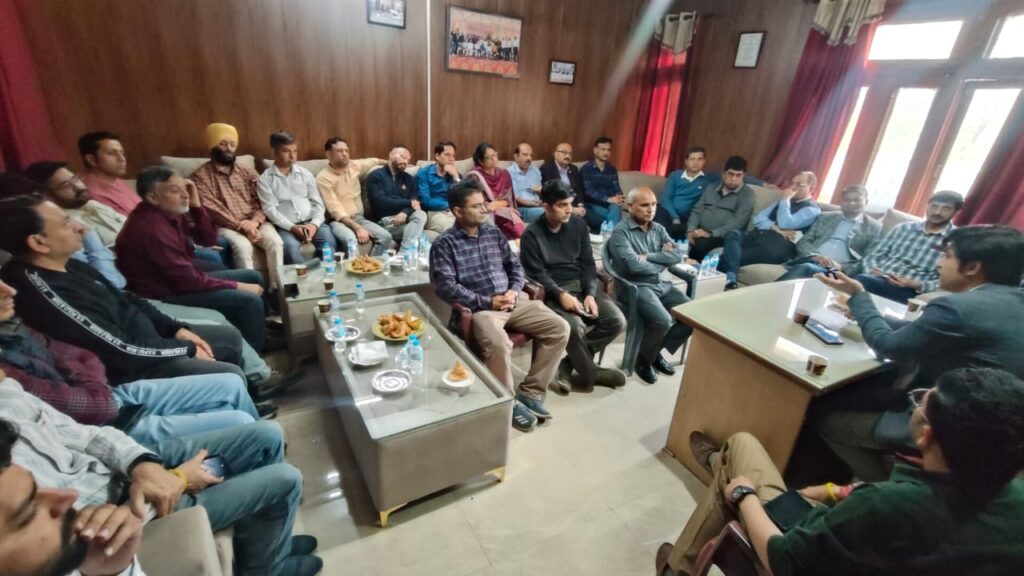
The issue was discussed during a meeting of the JKEEGA Executive Body held in Jammu under the chairmanship of its President, Sachin Tickoo. The members deliberated on the implications of Notification SO-193, issued by the Power Development Department on July 7, 2026.
According to JKEEGA, the notification increases the threshold for self-certification under Regulations 32 and 45 of the Central Electricity Authority (Measures Relating to Safety and Electric Supply) Regulations, 2023, from 650 volts to 11 kV.
The association said the decision could have wide-ranging implications for electrical safety, public interest, engineering standards and independent statutory oversight. It maintained that electrical installations operating at 11 kV involve greater technical complexity and higher risks compared to low-voltage systems.
JKEEGA stated that high-tension installations require specialised assessment of protection systems, relay settings, insulation, earthing, transformers, switching equipment and other safety mechanisms. Any deficiency in the design, installation or commissioning of such systems could lead to electrocution, fires, arc-flash incidents, transformer failures, prolonged power outages and damage to public or private property, the association claimed.
The association also highlighted the role of the Electrical Inspectorate, describing it as an independent statutory safeguard responsible for verifying whether electrical installations comply with prescribed technical and safety standards before being energised.
JKEEGA expressed concern that extending self-certification up to 11 kV could reduce the scope of independent inspection for a large number of high-tension installations.
The association further claimed that the matter was not placed before the Minister in charge of the Power Department despite being an important policy decision concerning public safety and the functioning of government-owned power utilities, including JPDCL, KPDCL and JKPTCL.
JKEEGA said that the earlier government notification, SO-368, issued on July 15, 2024, had fixed the self-certification threshold at 650 volts. According to the association, increasing the limit to 11 kV represents a major change in the existing electrical safety framework.
It said such a policy change should have been preceded by detailed technical studies, safety assessments, accident analysis, stakeholder consultations and a review of the implementation of the earlier notification.
Referring to practices in other states, JKEEGA said Tamil Nadu and Nagaland have retained the self-certification threshold at 650 volts, while Himachal Pradesh has reportedly fixed the limit at 440 volts. The association said these examples indicate that the threshold is determined by individual governments after considering local conditions, infrastructure and safety requirements.
In a letter addressed to the Chief Minister on July 11, 2026, JKEEGA requested a review and reconsideration of Notification SO-193. It also urged the government to keep the notification in abeyance until a comprehensive technical, legal and safety assessment is completed.
The association further proposed the constitution of a high-level technical committee comprising the Chief Electrical Inspector, representatives of the Power Development Department, JPDCL, KPDCL and JKPTCL, engineering associations, including JKEEGA, independent electrical safety experts and other stakeholders.
JKEEGA said the proposed committee should examine the technical, operational, legal and safety implications of increasing the notified voltage limit from 650 volts to 11 kV before the revised framework is implemented.