Posts by Vikas Shekhar Sharma

For nearly eight decades, the global conscience has viewed Jammu and Kashmir through a single, exhausted lens: a cartographic tug-of-war between New Delhi and Islamabad. We are told the tragedy is strictly external – a product of cross-border infiltration, geopolitical standoffs, and international legal deadlocks.

But this is a convenient geopolitical smokescreen.

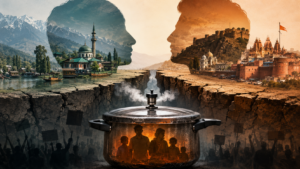
The deepest, most agonizing fracture of Jammu and Kashmir is not the external line drawn in the dirt by warring nations. It is an internal, emotional, and structural chasm that has been quietly tearing the region apart from within. The true tragedy has always been the wide, unaddressed wedge between its two primary sub-regions: the Kashmir Valley and Jammu.
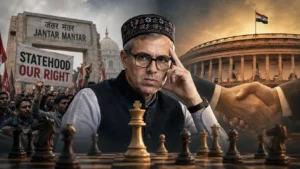
To blindly rush into restoring full provincial statehood without healing this domestic fault line is not a triumph of democracy. It is simply hitting the reset button on a broken machine. It returns absolute power to a structural framework designed for regional conflict, completely ignoring the ordinary people trapped in its gears.

1. THE ARTIFICIAL MARRIAGE (1947–1953)

  • How the Fault Lines Were Forged

To understand why the region cannot simply step back into its pre-2019 past, we must look closely at 1947. The Princely State of Jammu and Kashmir was never a single, unified cultural entity. It was an artificial administrative patchwork stitched together by conquest under the rule of the Dogra Dynasty.

When Maharaja Hari Singh signed the Instrument of Accession amidst a tribal invasion backed by Pakistan, Partition bound together completely different cultural, linguistic, and psychological worlds with a single stroke of a pen:

  • The Kashmir Valley: Ethno-linguistically Kashmiri, overwhelmingly Sunni Muslim, and deeply scarred by generations of feudal rule.
  • Jammu: Heavily Hindu and Punjabi-influenced, fiercely proud of its foundational Dogra heritage, and historically anxious about losing its identity to a demographically majoritarian neighbor.

When power shifted after 1947, the political center of gravity moved permanently to Srinagar under Sheikh Abdullah. Early, radical land reforms – while celebrated as liberation and social justice in the Valley – were executed with sweeping authority and zero input from Jammu. To Jammu’s landowners and peasantry, it felt like their economic backbone was being broken without their voice even being heard.

ALSO READ: Diverse yet United, A New Jammu Kashmir: Breaking the divide of an “And” in between

From its very birth, the modern state was built on a zero-sum game: what was a historic victory for Kashmir was felt as a structural defeat for Jammu. We built a house where one room could only be illuminated if the other was left in total darkness.

2. THE JAMMU PARADOX

  • A Shared Culture Beyond Faith

The greatest mischaracterization of this internal divide is the lazy tendency of outside commentators to view it as a simple Hindu-versus-Muslim conflict. It is far more complex. The cultural identity of the Jammu region runs deeper than religious fault lines.

Crucially, the substantial Muslim population residing within the Jammu region – including the native Paharis, Gujjars, Bakerwals, and Dogra Muslims – presents a profound paradox to the Srinagar-centric narrative. Geographically and culturally, their hearts and loyalties are fiercely pro-Jammu.

These communities do not align with the political or linguistic aspirations of the Kashmir Valley. Instead, their lives, dialects, and social fabrics are inextricably bound to the composite culture that shares deep Dogra roots. They share the exact same regional grievances of “step-motherly” treatment by Srinagar’s rulers as their Hindu neighbors do. By ignoring this, successive political regimes have tried to split Jammu on purely religious lines, completely failing to understand that Jammu’s regional pride and sense of neglect transcend faith.

3. SILENT SUBJUGATION

  • The Hegemony of the Valley (1953–2019)

For over six decades after the collapse of the monarchy, Jammu and Kashmir operated under a constitutional and legislative architecture that guaranteed one-sided dominance for the Valley. Despite Jammu making up nearly 46% of the territory and consistently contributing the lion’s share of the state’s tax revenue through tourism, trade, and industry, political control remained firmly anchored in Srinagar.

This was not a minor bias; it was a structural wall built to keep Jammu secondary:

Legislative Gerrymandering

Until the reorganization of 2019, the state assembly seats were mathematically skewed. The Kashmir Valley held a permanent majority with 46 seats, while the vast geography of Jammu was capped at 37. This meant that no political leader from Jammu, regardless of their mandate, could ever become Chief Minister on their own strength. Leadership was, by default, a Kashmiri monopoly, ensuring that state policies always prioritised the anxieties of Srinagar while Jammu’s development was brushed aside as an afterthought.

The Disenfranchised Ghosts

Nothing exposed the cruelty of this framework more than the plight of the West Pakistani Refugees – mostly Hindu and Sikh marginalized communities who fled to Jammu during the horrors of Partition. For seventy years, they were denied basic state citizenship (Permanent Resident Certificates). They could vote for the Prime Minister of India, but they were legally barred from voting in local state elections, owning a single patch of land, or applying for even the lowest-tier government jobs. They lived as institutional ghosts, second-class citizens in a land that loudly preached the gospel of autonomy and human rights.

The “Darbar Move” Circus

Nothing captured the absurdity of this forced marriage more than the Darbar Move. Every six months, at astronomical cost to the taxpayer, the entire state government physically packed up its files, computers, and thousands of bureaucrats to migrate between Srinagar and Jammu. It was a literal traveling circus born out of mutual distrust – a concession designed purely to satisfy the regional egos of two populations that refused to look each other in the eye.

4. THE BROKEN MIRROR

The Insurgency and the Road to 2019

When an armed, Pakistan-sponsored insurgency exploded in the Valley in 1989, the internal chasm hardened into concrete. The Valley became a tragic theater of conflict, radicalization, and heavy militarization. But while the Valley bled publicly, Jammu suffered a different kind of wound – the quiet, corrosive wound of invisible neglect.

Development funds, administrative focus, and central packages were consistently diverted to the Valley under the banner of “pacification” and security management. Jammu’s local politicians learned to weaponize this abandonment, stoking majoritarian fear to protect their own careers. Meanwhile, Srinagar’s elite used the existential threat of Delhi’s overreach to maintain a tight grip on local institutions.

ALSO READ: A Plea for Pride & Dignity: The Quest for Statehood in Jammu and Kashmir

By the time Article 370 was abrogated in August 2019 – bifurcating the state, separating Ladakh, and turning Jammu and Kashmir into a Union Territory under direct central control – the two regions were already living in completely different psychological realities. Jammu celebrated the end of political subjugation; the Valley felt stripped of its historic identity.

The Roaring Whistle of the Pressure Cooker

The true, unvarnished tragedy of Jammu and Kashmir lies in a bitter, cyclical truth. The political survival of the Valley’s elite has historically depended on speaking against Jammu. Conversely, the political careers of Jammu’s leadership have been built entirely on stoking resentment against Kashmir. It is a perfectly symmetrical theater of grievance, where hatred is currency and division is power.

And in the middle of this grand political circus, a quiet, devastating question goes unasked: What about the people?

No one asks the ordinary citizens what they actually need to survive. No one asks about the failing local schools, the massive youth unemployment, the broken civic infrastructure, or the simple human desire to live a life free from structural anxiety.

The high-pitched whistles of the political pressure cooker blow loudly on television screens, in policy papers, and on international stages, generating noise, posturing, and ideological fury.
Meanwhile, the Aam Aadmi – the ordinary human being on the ground, whether a craftsman in the Kashmir Valley or a farmer in the Jammu Division – is slowly roasted alive in the boiling anxieties of a system that refuses to heal itself.

Until we stop treating Jammu and Kashmir as a geopolitical chess piece and start treating its sub-regions with absolute internal equity, a hurried return to statehood is not an act of liberation. It is merely handing the matches back to the arsonists and waiting for the next explosion.