Srinagar, January 9:
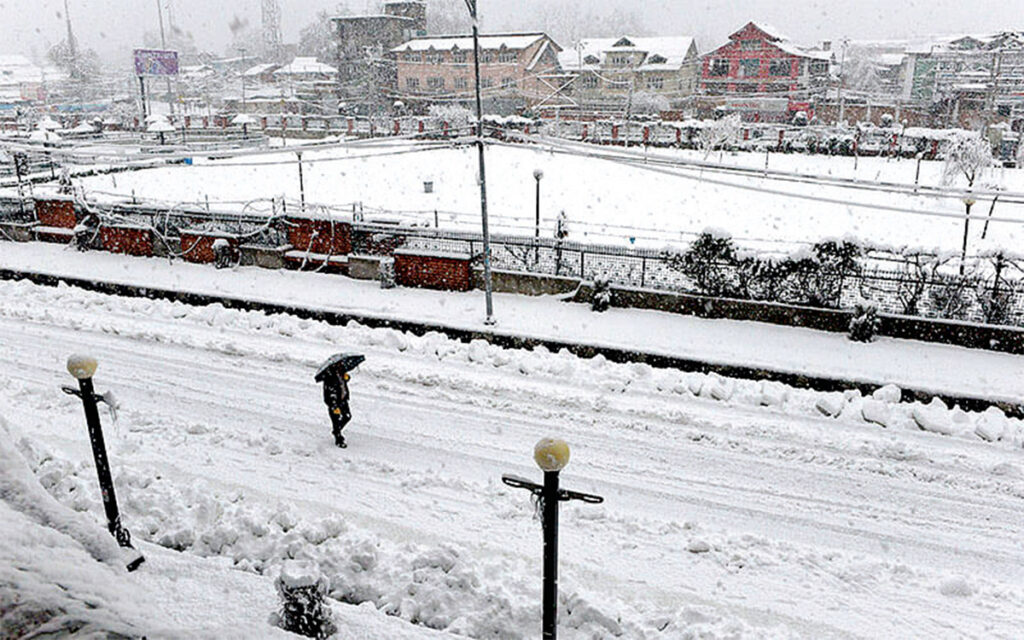
The relentless winter grip on North India tightened further on Thursday night as mercury levels across Jammu, Kashmir, and Ladakh plummeted to record lows. While the Kashmir Valley is currently enduring the peak of the winter chill, the Ladakh region has turned into a “refrigerator,” with temperatures in Drass dropping nearly 25 degrees below freezing.
Kashmir Valley: The White Desert
Srinagar recorded a bone-chilling minimum of –6.0°C, while the airport area was even colder at –7.4°C. Shopian currently holds the title for the coldest spot in the Valley at –7.7°C.
-
Pahalgam: –7.6°C
-
Gulmarg: –7.2°C
-
Anantnag: –7.1°C
-
Qazigund: –6.2°C
The intense cold has led to the partial freezing of small water bodies and water supply pipes in several areas, making daily life a struggle for residents.
Ladakh: Life at -24°C
In Ladakh, the conditions have turned extreme. Drass, often called the gateway to Ladakh, recorded a staggering –24.6°C. Other parts of the high-altitude desert are also reeling under sub-zero conditions:
-
Nyoma: –21.6°C
-
Padum: –20.3°C
-
Leh: –14.4°C
Jammu Division: Fog and Frost
While Jammu city remains comparatively milder at 5.6°C, the “winter bite” is being felt in the higher reaches of the division. Regions like Bhaderwah (–3.4°C) and Rajouri (–1.7°C) have slipped below the freezing point, while Katra, the base camp for the Vaishno Devi shrine, recorded a low of 3.5°C.
Health Advisory: How to Stay Safe
With the cold wave expected to persist, authorities and health experts have issued a safety advisory for residents and tourists:
-
Dress in Layers: Wear multiple layers of loose-fitting, lightweight, warm woolens rather than one single heavy layer.
-
Protect Extremities: Ensure your head, neck, hands, and feet are covered, as these are the primary areas of heat loss.
-
Ventilation is Key: If using coal or gas heaters indoors, ensure proper ventilation to avoid carbon monoxide poisoning.
-
Stay Hydrated: Drink warm fluids and eat foods rich in Vitamin C to maintain immunity.
-
Check on Vulnerables: Monitor the elderly and children, who are at higher risk of hypothermia.